

How Digital Marketing Helps Clinics Increase Patient Appointments

22nd June, 2026
 21st June, 2026
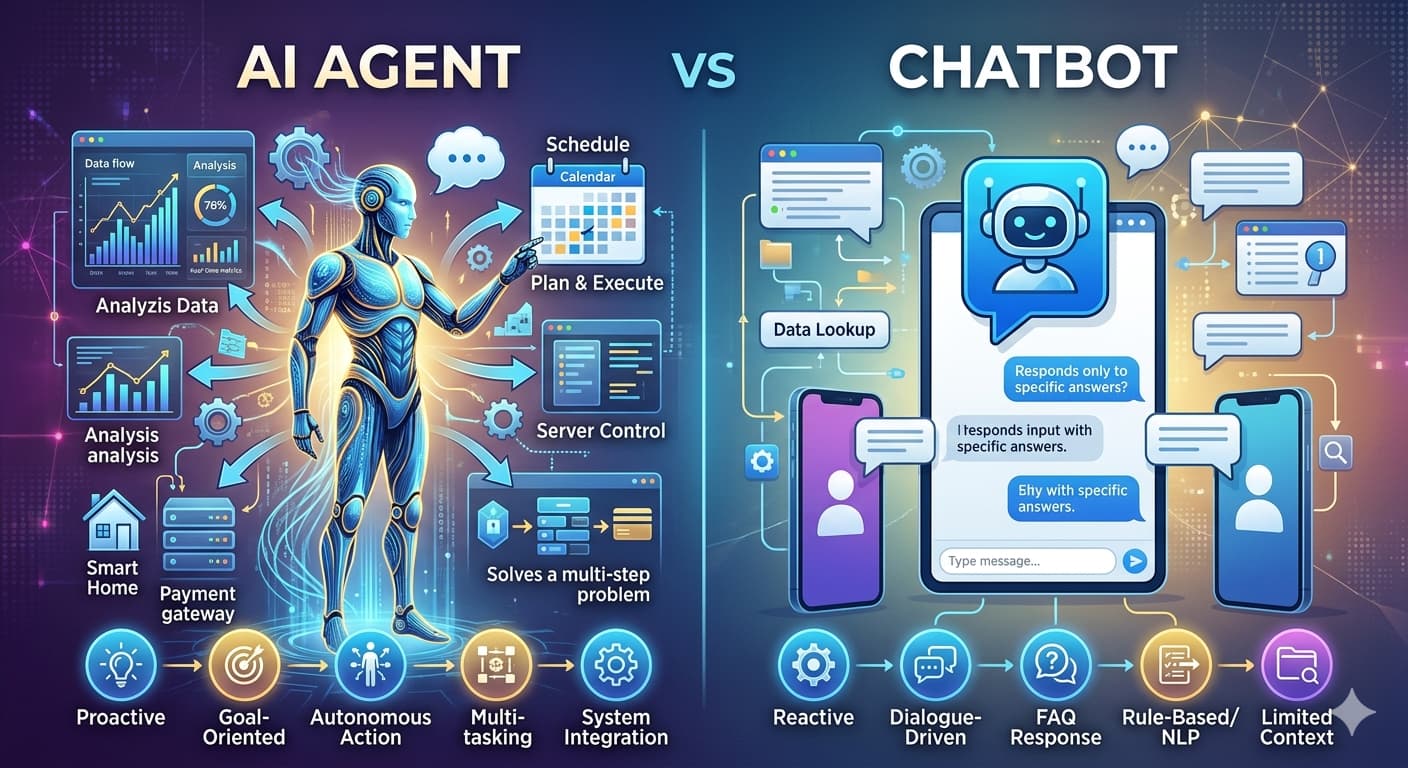
Most people meet AI through a chat window, they type a question, wait for an answer, and move on.
That is useful, but it is not the full picture, a chatbot can reply, while an AI agent can understand a goal, choose a next step, use tools, and keep moving toward a result.
So when people ask what is an ai agent, the simple answer is this, it is not just software that talks, it is software that can act.
This difference matters because modern brands do not only need faster answers, they need smarter systems that can support sales, service, marketing, operations, and customer experience with less manual effort.
A normal tool waits for instructions, an AI agent works from an objective.
That is the simplest way to understand it.
When someone asks what is an ai agent, they are usually trying to understand the shift from conversation to action, from answering a prompt to completing a task.
An AI agent can receive a goal, break it into steps, decide what information it needs, use connected tools, learn from feedback, and continue until the job is done or a human needs to approve the next move.
This is different from asking a chatbot one question at a time, the chatbot responds, the agent works.
For a business, this can mean faster follow ups, smarter customer support, automated lead handling, campaign assistance, reporting, scheduling, and better use of internal data.
An AI agent is not magic, it is a system with a clear goal, useful tools, and rules that guide what it can and cannot do.
The easiest way to see the difference is to look at what happens after the first message.
A chatbot gives an answer, an AI agent takes a direction and works through it.
When people search for what is an ai agent, they are often looking for this exact difference, not a technical definition, but a clear line between software that responds and software that helps move work forward.
This is the real shift, a chatbot can tell a customer what services you offer, but an AI agent can qualify the lead, send the details to your CRM, suggest the next message, and alert your team when action is needed.
The chatbot is the conversation, the agent is the workflow behind it.
An AI agent does not think like a person, but it follows a pattern that feels closer to how work actually gets done.
First, it understands the goal, then it checks what information is available, then it chooses the next useful step.
This is why what is an ai agent is not only a technology question, it is a workflow question.
A good agent does not jump straight to an answer, it reads the situation, decides what matters, uses the right tool, and adjusts when the result is not enough.
For example, if a lead asks about a service, the agent may check the service page, collect the client’s details, ask one useful question, update the CRM, and prepare a follow up for the sales team.
The value is not that it talks well, the value is that it knows what to do next.
A chatbot is useful when the work ends with an answer.
An AI agent becomes useful when the work needs a next step.
This is the point many businesses miss, they do not need more replies, they need fewer gaps between the reply and the action that should follow.
When someone asks what is an ai agent, one practical answer is this, it can help complete the small tasks that usually slow a team down.
An AI agent can qualify a lead, update a CRM, prepare a sales follow up, summarize customer conversations, check campaign data, organize requests, suggest content actions, and hand the right information to the right person.
A chatbot may answer a question about your service, but an agent can notice that the person is ready to buy, collect the needed details, and move the opportunity forward.
The difference is small at first, then it becomes large, because every saved step removes friction from the business.
Not every AI agent is built for the same kind of work.
Some agents are simple, they follow rules and complete clear tasks, others are more advanced, they can compare options, use data, connect with tools, and improve the way a process moves.
This is why people also ask what are ai agents, because the term can describe more than one type of system.
A customer support agent can answer questions and route requests.
A sales agent can qualify leads and prepare follow ups.
A marketing agent can help plan campaigns, read performance data, and suggest next actions.
An operations agent can organize internal tasks, update records, and reduce repetitive manual work.
The best type is not the most advanced one, it is the one that solves the right problem without adding more complexity.
AI agents become easier to understand when you stop looking at the technology and start looking at the work.
Every industry has repeated steps, questions that come back every day, leads that need sorting, reports that need reading, and customers who expect faster answers.
This is why what is ai agent matters for real businesses, because the value is not in sounding advanced, the value is in removing slow parts from daily work.
In marketing, an agent can help review campaign performance and suggest the next move.
In sales, it can qualify leads before the team spends time on a call.
In customer service, it can organize requests and pass complex cases to the right person.
In real estate, healthcare, education, retail, and finance, the same principle applies, less waiting, better routing, clearer follow up.
Good automation does not replace the business, it removes the small delays that stop the business from moving well.
Also read: Organic Marketing vs Paid Marketing
An AI agent should not begin with technology, it should begin with one repeated problem.
Before asking what is an ai agent, ask where your team loses time every week, lead follow ups, customer questions, campaign reports, booking requests, CRM updates, or internal approvals.
This is where what are ai agents good at becomes clear, they are good at structured work that happens often, follows a process, and becomes easier when data, tools, and decisions are connected.
To build one, you need a clear goal, clean data, the right tools, approval rules, and a simple workflow that tells the agent when to act and when to ask a human.
With AI Agent Development Services, Digializer can help turn these repeated tasks into practical systems that support your team without making the work feel more complicated.
Also read: The Evolution of Construction Marketing: How to Grow a Construction Business Online
ِConclusion
The question is no longer whether businesses should use AI, the better question is where AI can remove delay without removing control.
When people ask what is an ai agent, they are really asking how a business can move from answering faster to operating smarter.
The right AI agent does not replace strategy, it supports it, it connects customer questions, sales steps, marketing actions, data, and follow ups into one clearer system.
As a Digializer marketing agency, we help brands build practical AI systems that fit real workflows, not just impressive demos.
If your business is ready to connect automation with growth, explore Digializer’s Digital Marketing services and start building an AI agent that works with your team, not around it.
Also read: Marketing Funnel vs Sales Funnel: How They Work Together to Drive Growth
An AI agent is a system that can understand a goal, choose the next step, use connected tools, and help complete a task.
A chatbot usually replies to a question.
An AI agent can move work forward.
The main difference between an AI agent and a chatbot is action.
A chatbot is useful for simple replies.
An AI agent is better for workflows because it can qualify leads, update a CRM, prepare follow-ups, route requests, and support business tasks after the conversation starts.
An AI agent can help a business reduce repeated manual work.
It can collect customer details, summarize conversations, organize support requests, check campaign reports, update internal systems, and prepare next actions for the team.
An AI agent can handle guided tasks without constant human input, but it should still work within clear rules.
The best setup includes permissions, approval points, human review, and limits for sensitive decisions.
AI agents are good at repeated tasks that follow a clear process.
They are useful for lead handling, customer routing, CRM updates, reporting, booking requests, follow-ups, and internal approvals.
AI agents are not always better than chatbots.
A chatbot may be enough for basic questions.
An AI agent is more useful when the business needs action after the answer, such as updating a system, preparing a report, or moving a lead to the next stage.
Examples of AI agents include sales agents that qualify leads, customer support agents that route requests, marketing agents that review campaign performance, and operations agents that update records or organize repetitive tasks.
You may need an AI agent if your team spends too much time on repeated tasks.
Missed follow-ups, manual CRM updates, delayed reports, repeated customer questions, and too many handoffs are all signs that an AI agent could help.
AI agents can be safe and reliable when they are built with clean data, limited access, clear workflows, approval rules, and human oversight.
The goal is not unlimited control.
The goal is controlled automation.
Start with one repeated problem.
Choose a task that wastes time every week, such as lead follow-up, reporting, customer routing, or CRM updates.
Then build the AI agent around that workflow, test it, improve it, and expand only when it proves useful.

22nd June, 2026

11th June, 2026

16th May, 2026

9th May, 2026